AICUZ noise zones are areas around NAS Oceana and NALF Fentress where jet noise or crash risk is high enough that the City of Virginia Beach regulates what can be built there. If a home sits in a noise zone or an Accident Potential Zone, Virginia law says the seller has to tell you in writing before you buy. A noise zone doesn't mean you can't buy the house, but you should know which zone it's in, go hear it for yourself, and think about resale before you sign.
If you're coming to Hampton Roads on orders, this is one of the first things worth understanding. Some of the most convenient neighborhoods for Oceana and Dam Neck sit right under the flight paths.
What does AICUZ actually stand for?
AICUZ means Air Installations Compatible Use Zones. It's a Department of Defense program that maps the land around military airfields based on two things: how loud it gets and how likely an accident is.
In Virginia Beach, that map covers the areas around Naval Air Station Oceana and Naval Auxiliary Landing Field Fentress, which sits in Chesapeake but has noise zones that reach into Virginia Beach. The city uses that map in its zoning ordinance, so it affects what can be built, what has to be disclosed, and in some spots whether homes can be built at all.
What do the noise zone numbers mean?
The noise zones are measured in DNL, also written Ldn. That's the average sound level over a full 24 hours, with nighttime noise weighted heavier. It's an average, so it won't tell you how loud a single jet is when it goes over your backyard.
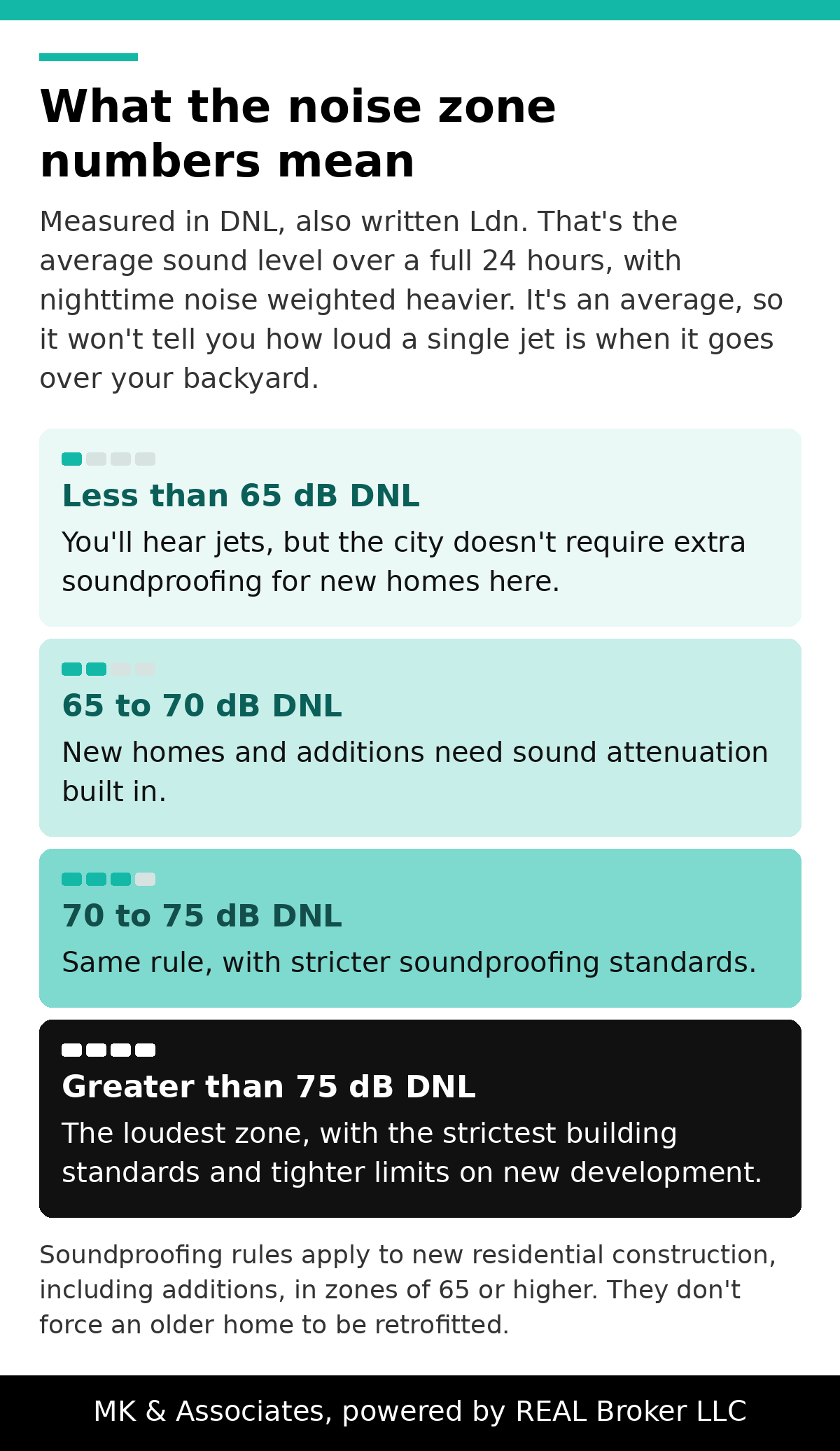
The city's map uses these bands:
- Less than 65 dB DNL. You'll hear jets, but the city doesn't require extra soundproofing for new homes here.
- 65 to 70 dB DNL. New homes and additions need sound attenuation built in.
- 70 to 75 dB DNL. Same rule, with stricter soundproofing standards.
- Greater than 75 dB DNL. The loudest zone, with the strictest building standards and tighter limits on new development.
The soundproofing rules apply to new residential construction, including additions, in zones of 65 or higher. They don't force an older home to be retrofitted. So two houses on the same street can sound very different inside depending on when they were built.
What is an Accident Potential Zone?
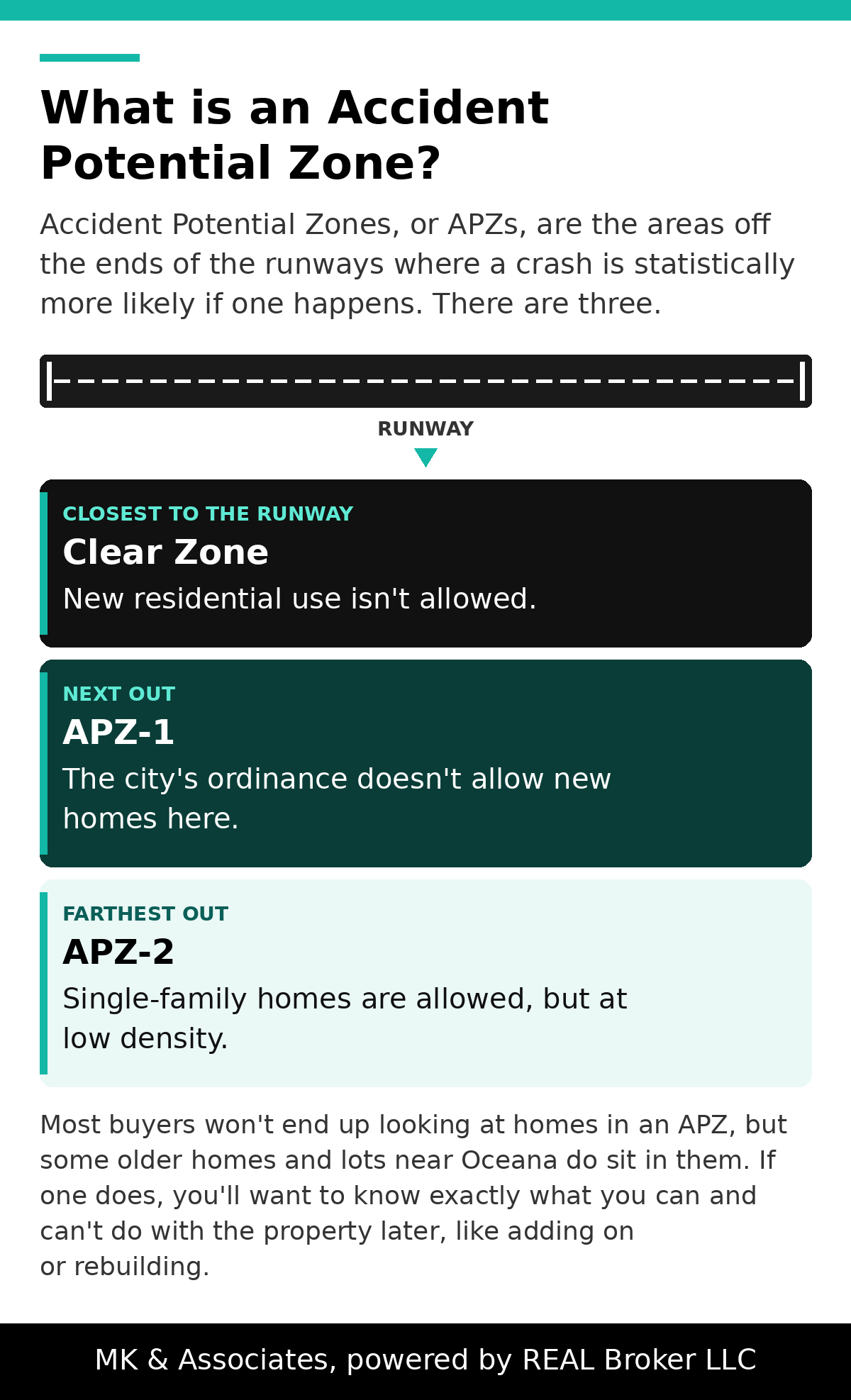
Accident Potential Zones, or APZs, are the areas off the ends of the runways where a crash is statistically more likely if one happens. There are three:
Double-click to edit...
- Clear Zone. Closest to the runway. New residential use isn't allowed.
- APZ-1. Next out. The city's ordinance doesn't allow new homes here.
- APZ-2. Farthest out. Single-family homes are allowed, but at low density.
Most buyers won't end up looking at homes in an APZ, but some older homes and lots near Oceana do sit in them. If one does, you'll want to know exactly what you can and can't do with the property later, like adding on or rebuilding.
Does a seller have to tell me if a home is in a noise zone?
Yes. Virginia Code § 55.1-704 says the owner of a home in a locality with a military air installation has to tell the buyer whether the property is in a noise zone, an Accident Potential Zone, or both, based on the locality's official zoning map. It has to be on the Virginia Real Estate Board's form, and it has to name the specific zone.
If you rent instead of buy, landlords have a similar duty under Virginia Code § 55.1-1217. They have to give you the disclosure before you sign the lease. If they don't, you can end the lease during the first 30 days by sending written notice by certified or registered mail.
The disclosure is a good start, but don't treat it as your only check. Look the address up yourself, early, before you fall in love with the house.
How do I check if a specific home is in a noise zone?
The quickest way is to use our AICUZ lookup by address. Type in the address and you'll see which zone it falls in. You can also check the City of Virginia Beach AICUZ page and its zoning maps.
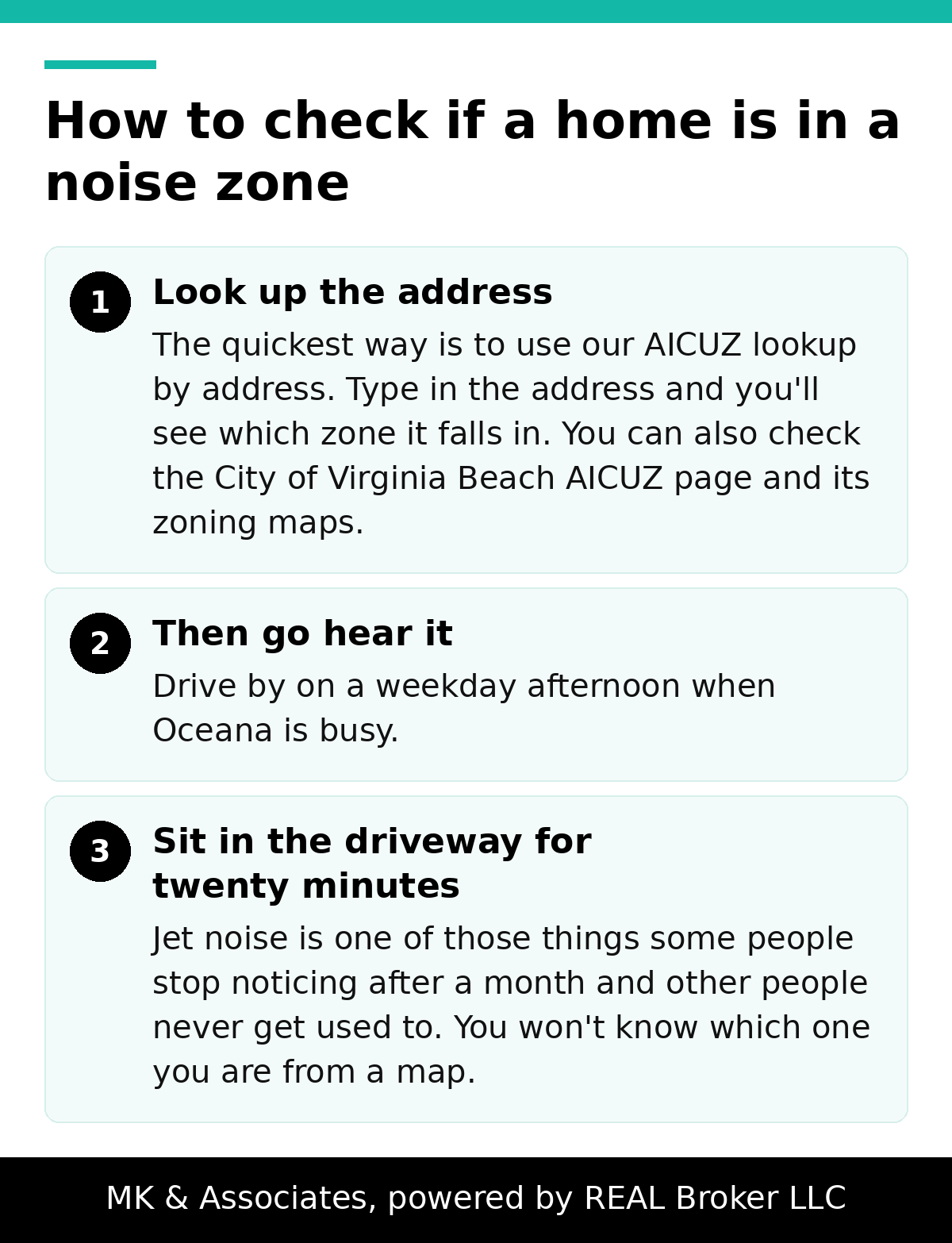
Then go hear it. Drive by on a weekday afternoon when Oceana is busy, sit in the driveway for twenty minutes, and listen. Jet noise is one of those things some people stop noticing after a month and other people never get used to. You won't know which one you are from a map.
Should a noise zone stop me from buying?
Not always. Plenty of military families and longtime locals live in the 65 to 70 zone and like it there, especially if it keeps them close to base and the beach. Homes in louder zones can also price differently than similar homes outside them, which can work in your favor going in.
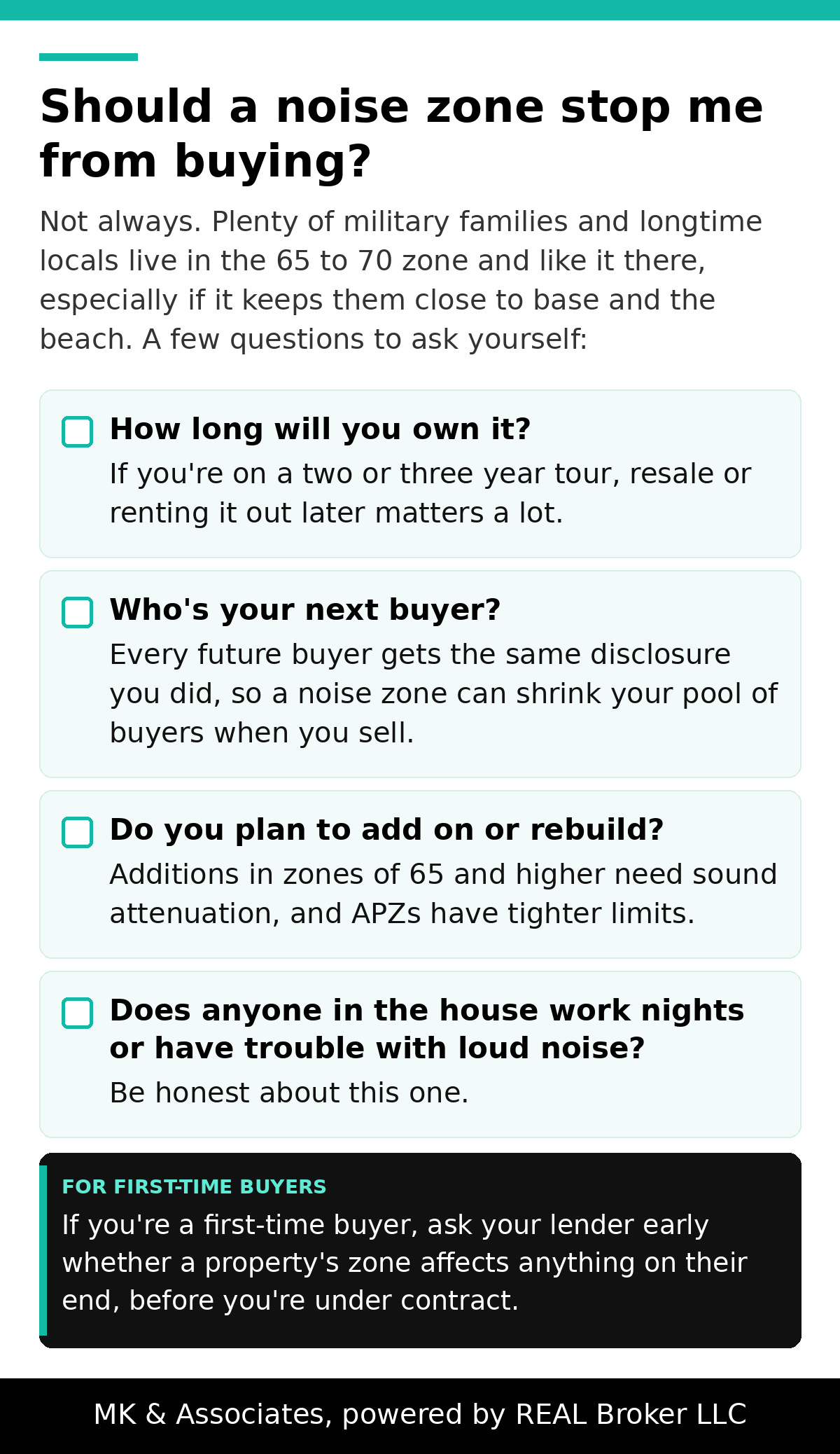
A few questions to ask yourself:
- How long will you own it? If you're on a two or three year tour, resale or renting it out later matters a lot.
- Who's your next buyer? Every future buyer gets the same disclosure you did, so a noise zone can shrink your pool of buyers when you sell.
- Do you plan to add on or rebuild? Additions in zones of 65 and higher need sound attenuation, and APZs have tighter limits.
- Does anyone in the house work nights or have trouble with loud noise? Be honest about this one.
If you're a first-time buyer, ask your lender early whether a property's zone affects anything on their end, before you're under contract.
What if I'm selling a home in a noise zone?
You'll need to fill out the disclosure form and name the correct zone, so look it up before you list. Getting it wrong can come back on you. Under Virginia Code § 55.1-713, a buyer can sue for actual damages if the disclosure is missing or wrong, although that doesn't apply to zones below 65 dB.
The bigger job is pricing it right. Buyers will see the disclosure, and the good ones will compare your home to sales in the same zone, not just the same neighborhood. If you price it like the house across the zone line, it tends to sit. Our post on why overpricing your home is a costly mistake explains why that matters.
Frequently asked questions
Are AICUZ zones only around Oceana? In Virginia Beach, the zones come from NAS Oceana and NALF Fentress. Other Hampton Roads cities with military airfields, like Norfolk and Hampton, have their own maps.
Can the noise zones change? They can. The city's current map is based on the 2005 Hampton Roads Joint Land Use Study, and the Navy can update its study when aircraft or flight operations change. Always check the current official map for the address you're looking at.
Does a home in a 65 to 70 zone come with soundproofing? Only if it was built or added on after the soundproofing rules applied, and even then only the new construction. Ask the seller about window and insulation upgrades, and listen inside with the windows closed.
Do I get the disclosure if I'm renting? Yes. Virginia landlords have to give it to you before you sign a written lease, or before you move in on an oral lease.
Is a noise zone the same as a flood zone? No. They're separate maps with separate rules. A home can be in one, both, or neither.
Want help looking at homes near Oceana?
Our team works with military families and first-time buyers all over Virginia Beach, and we check the zone on every home before you get attached to it. If you want a second set of eyes on an address, or you're trying to figure out where to live before your PCS, reach out to our team and we'll walk you through it.
You can also browse Virginia Beach homes and neighborhoods or look up schools with our school locator.
MK & Associates, powered by REAL Broker LLC